History

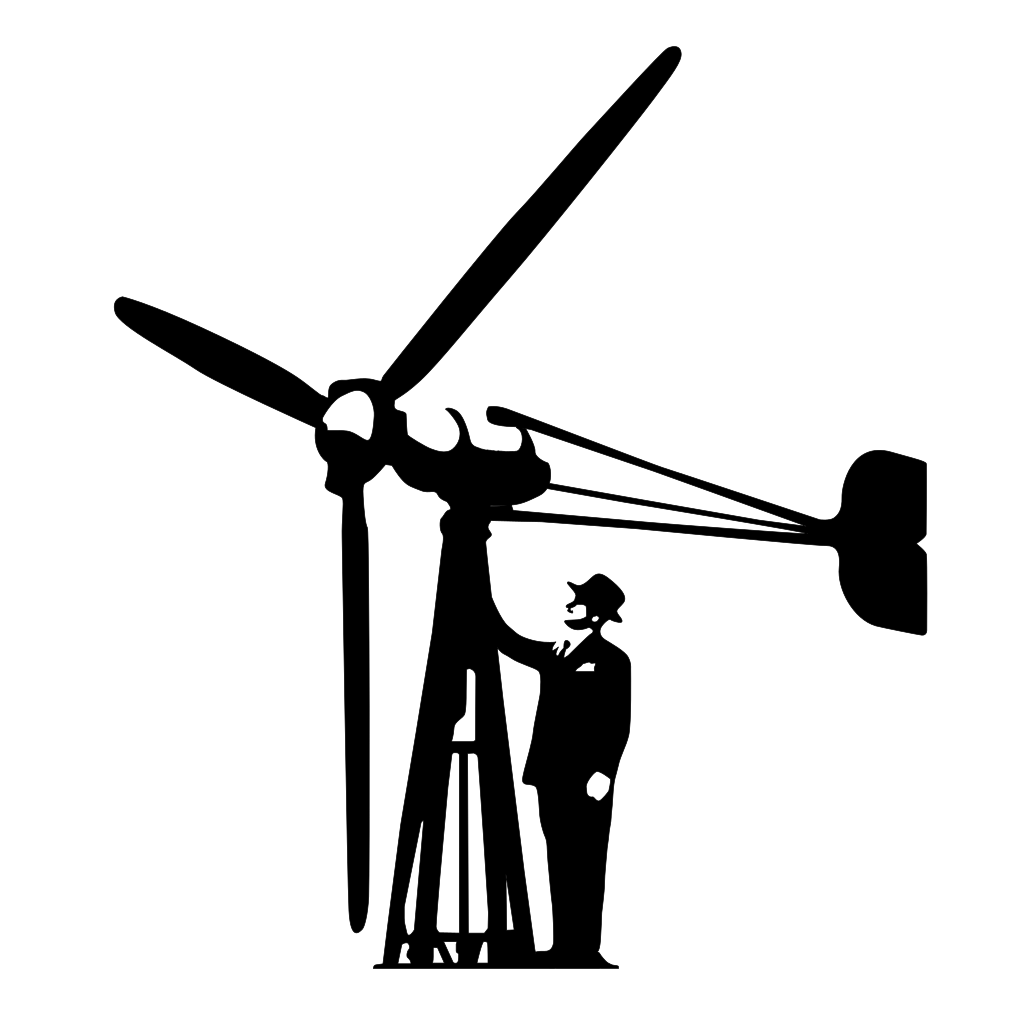
The Jacobs Wind Electric Company has been in existence for over 80 years. It started on the plains of Montana then moved to Minnesota, manufacturing wind machines sold all over the world. Jacobs Wind was responsible for bringing electricity — and a better standard of living — to areas beyond the reach of utilities, advancing the technology of wind energy, and pioneering design concepts, some of which are still in use today.
In the original era of distributed wind generation (1920s to 1950s) tens of thousands of small wind plants began charging “islands” of modern technology centers, illuminating with electric power and lights small portions of otherwise poorly powered areas on six continents. Before the second era of wind energy development (1970s to 1980s) when the “energy crisis” focused on the limitations of fossil fuels, Jacobs Wind’s founders moved to FL and focused on marine products and interests from the mid 1950s to 1975. Their most important discovery during this era was the use of a form of natural energy, tidal energy, to move vast quantities of water daily to reduce pollution in man-made waterways and thereby enhancing the marine environment and food chain for the growing population residing in the coastal zone interface.

Originally, Jacobs Wind relied heavily on word of mouth to spread its name. At the time, this worked very well. Unfortunately this, as with all oral based histories, fell victim to the passage of time and the loss of many who were around to witness its events. This greatly reduced general knowledge about Jacobs Wind, its founders, and what they accomplished.
This is our story, told with accounts, documents, and photographs from our company. The following pages break down the history of Jacobs Wind into three major sections: the inception of the company, its first major run, and its return during the energy crisis of the 1970s and 80s. While still around today, this information will give a better picture of what Jacobs Wind Electric stood for, and still represents to this day.
Beginnings
First Generation of Design (1920-1931)

The Jacobs story begins in the early part of the 1900s with brothers Marcellus (1903-1985) and Joe Jacobs. After leaving Indiana in 1910, the Jacobs family moved to Montana and lived in Culbertson for two years before their father, Amos, moved the family to a small ranch southeast of Vida, MT.
It was here that Marcellus, or M.L. as he was commonly known, and Joe worked on improving the ranch to bring it up to modern standards at the time, including wiring it for electricity. By 1920 they had installed a Delco generator used to power devices such as electric lights, water pumps, irons and the coming high technology of the era: radios. The generator, constrained by gasoline for operation, proved troublesome to keep running. The nearest town was 40 miles away and refueling was less than practical (a 3 day round trip by wagon to fill gas cans). With few electric power lines in rural areas at this time, however, options were limited.
Original Company
Second Generation of Design (1932-1950s)

The Jacobs Wind Electric factory was located for over 20 years (until 1957) at 2111 Washington Ave. North in Minneapolis, MN. It is here that most of the production of the first Jacobs Wind took place. The machines produced here were 1.5 kW to 3 kW models, which, like their predecessors, were repeatedly refined.
Word of Jacobs Wind spread and it was known as the most dependable wind machine on the market. Over its first run, roughly twenty thousand Jacobs machines were produced and distributed worldwide. These machines could be seen everywhere from America to Canada, Africa, Asia, Europe, and even Antarctica. This last location was one of Jacobs’ early claims to fame, demonstrating the true resilience of the machine.
Second Iteration
The Energy Crisis and Return of Jacobs Wind Electric: Third Generation Design (1974-1985)
The 1960s came and went with little talk of wind energy. While the concept of wind energy lived on the overall technology, by some accounts, actually took a step back during this time period.
Alternative energies were thrust into the spotlight once more in the 1970s. Turmoil over new energies, such as nuclear power, and the harmful effects of coal power bolstered the ranks of environmentalists. They looked to other means of energy production.
The real policy changing catalyst, however, came in the form of the 1973 OPEC oil embargo. As with many changes in history, it took the push of upsetting the status quo, in this case, of the energy market. Quadrupling the price of oil was just that push.
Wind energy now had a new role. While it had been used as a sole provider of electricity where there was otherwise none (off-grid use) it was now looked at as a way of tying into and supplementing the existing infrastructure, or on-grid use. This is the direction that Jacobs Wind went — a system that could power a household and add energy to the grid in times of good wind, but could also use utility resources when gusts were poor.
Archive
There’s more to be seen and read about the Jacobs Wind Electric Company. This section is a collection of some additional historical photos and documents from old articles, to letters, to reports.